Showing posts with label culling. Show all posts

Wednesday, 18 September 2013

Flee or Die?

I should have just copied and pasted my post from this time last year, but I will make this one unique and start from fresh again.

It's that time of the year and unfortunately the wild boar have made their presence known throughout the area, rooting around the road verges and in (one reported) instance, rooting up someone's lawn.

Article HERE

The next four to five months will see a bombardment from people screaming for the boar to be killed and even eradicated from the area due to them rooting over the road verges.
I understand that if boar manage to enter private property, they can do an awful amount of damage and this can be heartbreaking for the owners.
Apart from erecting a sturdy fence or building a wall high enough to stop them, there really isn't much that can be done to stop them if they are attracted to the property.
All it takes is for fruit from a tree to be lying on the ground, or waste food and this will be enough to attract them.

I really do feel for the people, which lose their lawns in this way and I also understand that not everyone has the money to secure their perimeter, so they really are left in despair.

The Forestry Commission are currently culling 135 wild boar in the Forest of Dean and if I was in this situation, I would be asking them to concentrate on the areas that are seeing boar rooting around, or on private land as this will stop the problem and the FC can leave the boar alone, in the middle of the forest where they are causing no harm to anyone.

Moving on to the present cull of 135 animals. Without information (through the Freedom of Information Act), I can only assume that boar are being culled in the forest, away from residential areas and we must once again ask the question. "Why is it that we see a cull at this time every year and at precisely the same time we see an increase in activity around the roadside and residential areas?"
Are the boar being forced to seek out safer locations, away from the guns? I have said this before, but if someone was walking down the street shooting my neighbours, I would not just sit there and wait for my turn, I would either fight back, or run.
The boar are running and this has also been touched on, in a slightly different way with the badgers. With badgers it is called the perturbation effect, where a threatened badger will flee the sett in search of safer ground, taking TB with it, if it is infected.
The boar are fleeing the safety of the area they are in and as the Forestry Commission can not shoot near residential areas, this is where the boar feel safe.
They are very smart animals and they are trying to stay alive, nothing more. All the FC has to do is concentrate on the boar, in the areas where the problems are occurring and push them back into the forest.
I mean lets face it, if they are being pushed out, why not shoot near the edges and push them back in as they will then feel that the periphery is not safe, whereas the denser parts are!

We are too quick to scream kill kill kill, but how many people have actually stopped for just one second to look in the mirror as we have caused more damage in the Forest of Dean than the boar will "ever cause."

The difference is that our damage is irreversible, whereas the boar are actually airing and cultivating the soil.
Slight difference there and it really should not be referred to as damage "all the time!"

Wild Boar Sow - in the Forest 

Wild Boar Sow with Piglets - in the Forest

Wild Boar Sow Rooting - in the Forest

Wild Boar Rooting on Industrial Estate During the Cull of 2010

Sow

Rob

Tuesday, 18 September 2012

Why Aren't We Vaccinating Cattle?


Why Aren't We Vaccinating Cattle?
Bovine TB – Time for a Rethink

Thanks to Sally for providing this Document and Link.

It is chronic and debilitating, it puts farmers out of business and destroys livelihoods. Are we talking about the disease, or the policy to control it?
Under the current UK policy, cattle are tested at regular intervals for exposure to Bovine TB. Those that fail the test are slaughtered and severe restrictions on cattle movement are placed on the farm. This is the ‘test and cull’ regime. It costs taxpayers £100million a year and has a devastating impact on farmers.
Test and cull requires regular and stressful handling of cattle which compromises both animal welfare and human safety. Compensation does not always cover the value of individual culled animals, and does not cover the consequences of movement restrictions or the loss of critical breeding stock. Even DEFRA describes the diagnostic skin test for Bovine TB as ‘imperfect’ in its ability to correctly identify animals that have been exposed to Bovine TB.
The test and cull policy, we are told, is there to protect human health, animal welfare and to meet our international (EU) commitments. Is it worth the cost?
Human Health: In the UK, human infection with the bacterium responsible for Bovine TB (Mycobacterium bovis) is almost non-existent because milk is pasteurised milk and meat is cooked. So negligible is the risk that cattle slaughtered under the test and cull policy, and those found at abattoirs to be infected, are sold for human consumption. Most of the very few cases of Bovine TB in humans were initially contracted in other countries or before the pasteurisation of milk became the norm.
Animal Health: Infected cattle have little probability of developing the disease and seldom show symptoms during their (often short) economic lives. Bovine TB can remain dormant in an animal for many years or indefinitely. If an animal reacts to the skin test this does not mean that it will go on to develop symptoms, be infectious, or become ill. There are other diseases of cattle that pose a more serious risk to human and animal health yet are not even notifiable. Many are simply vaccinated against.
International Commitments: UK policy is ultimately driven by the EU which requires member states to eradicate Bovine TB. It lays down the means to be used, and does not allow cattle vaccination. Since the BSE ban was lifted, the annual value of live cattle exports from the UK has never exceeded £3.3million.
What is devastating about Bovine TB is not the disease.
It is the test and cull policy.
As the Bovine TB Advisory Group concluded in its final report to Defra:
“Bovine TB has been a difficult and demanding problem for many years. There are reasons for believing that it can be controlled and finally eradicated but this will require a long-term commitment by all stakeholders and take at least 20 years.”
Can we afford the cost, and will farmers tolerate another 20 years of movement restrictions, inaccurate testing and compulsory cattle culling?
It has been pointed out that other countries with so-called wildlife reservoirs have achieved OTF status (Officially TB-free). However, they have done this by using the skin test as it was designed - as a herd test. If one animal fails the test, the whole herd is slaughtered and restocking is delayed. Officially TB-free status does not mean the disease has been eradicated, just that it has reached a low level – less than 0.5% of herds having breakdowns over a 5 year period. Even Officially TB-free countries have Bovine TB.
Would it not make sense to vaccinate cattle?
Vaccines can be used for two complementary purposes - to protect individuals or to protect populations. No vaccine provides complete immunity to individuals, just a measure of protection. If enough animals are vaccinated with a typical vaccine it is near impossible for an epidemic to occur – this is the principle of herd immunity.
According to DEFRA, a cattle vaccine against Bovine TB will be licensed this year (2012). However, current EU laws do not allow vaccination against Bovine TB. This is because BCG vaccination of cattle can interfere with the skin test, which is the recognised primary test for Bovine TB.
Defra state that they are working with the EU to change EU legislation on cattle vaccination, and on the use of the DIVA test which can differentiate between a vaccinated and an infected animal. They are working towards having the test certified for use at the end of 2012.
It is imperative that the obstacles to vaccinating cattle
against Bovine TB are removed as quickly as possible.
An EU derogation could be obtained to allow the UK to introduce a programme of cattle vaccination against
Bovine TB without further delay.
Contact your MP, MEP, and your Farming Union and ask that they make the vaccination of cattle against Bovine TB in the UK a priority.


More on bTB here: http://www.bovinetb.co.uk/


Rob


Wild Boar Cull Starting in Forest of Dean

In September 2011 the Forestry Commission agreed to suspend the cull of wild boar for 12 months. 

As the boar numbers were at a critically low level, this news was welcomed by many including Friends of the Boar.
The boar were able to breed, suckle, wean and live without the stress of being killed and this has seen a far more relaxed population of boar in the Forest of Dean.
However, for the last 12 months the boar have still been killed by poachers, RTA's, natural deaths and legal killing by landowners, reducing their numbers even further.
For the FC to suspend the cull of this animal for a whole year it has to tell you that they realised that this species had been over managed (culled) and that if they didn't give them a reprieve they could stand a real chance of being wiped out.
For the last 12 months Friends of the Boar have been actively recruiting volunteers to send in boar sightings online (confidentially). From all sightings gathered we then knocked off all duplicates from the same areas and we were left with 200 animals.
I understand that not all boar have been sighted and reported, but this is more respectable than the 650 animals estimated by the FC!

The FC have announced that they are to cull 100 wild boar in the Forest of Dean between now and January 2013. This is based on their estimation of 650 boar present at this time.
Now, just imagine that they are wrong in their estimation (like previously) and that there are in fact only 300 boar present at this time. They cull 100, which leaves 200 and then after further RTA's, poaching and legal shooting takes its toll, we could once again be left with a critical level of boar in the Dean.
A recent statement from a newly formed boar panel was "Doing Nothing is not an Option;" this is not animal management, this is not wildlife conservation, this is animal cruelty and murder!

I will now touch on two points.

1. How have I come by the estimation of only 300 wild boar?
Friends of the Boar estimated boar numbers to be below 100, probably around 90 when the FC declared they were abandoning the cull for 12 months in September 2011.
From 90 animals, lets say 50 were sexually mature sows, which mated in the later part of 2011. Given that not all young survive and that a sow can have between 2 and 8 young per-birth, lets say that on average 4 young survived for each sow. This equates to 200 boar and coupled with the 90, this gives us a total of 290, rounded up to 300.

2. What does this mean to our boar?  
The answer to this is quite simple, but at the same time devastating!
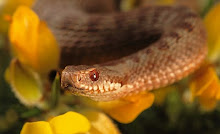
Wild boar roam in close knit groups called sounders, except for sexually mature males, which only associate with a sounder during the breeding season. If the boar numbers are at a very low level like we have seen recently, this will dramatically reduce the chances of a male finding suitable females. This can and probably will result in inbreeding, resulting in a dirty gene pool. We have seen this recently with our declining adder populations and as a result we are seeing smaller and infertile snakes.
Given the dirty gene pool and stress endured from culling, this could also make the boar more susceptible to disease such as TB.

I feel the boar were not given time for their numbers to stabilise and I also think there is more to this than just "Having to do Something."
An e-petition is on the way. As soon as it is available it will be posted here and everywhere!

Viva! is already covering our cause here: http://www.viva.org.uk/campaigns/wild_boar/index.php

FotB Official Website here: http://www.friendsoftheboar.moonfruit.com/

FotB on Facebook here: http://www.facebook.com/FriendsoftheBoar


On a positive note we can announce that we have three patrons.

1. Andy Rouse - http://www.andyrouse.co.uk/
2. Zara Boland - http://www.zarathevet.com/
3. Sarah Jane Honeywell - http://www.sarah-jane.biz/

We welcome all three to our cause and thank them immensely for their support!

This Piglet has been on a long journey. We can make the rest of it a lot easier for him!


Rob

Sunday, 26 February 2012

bTB - Badgers and the Cull!


During the month of November 2010 I contacted my local MP, Mr. Mark Harper on the issue of bTB and my concerns regarding the proposed badger cull.
It took a while, but I finally received a reply. Not from my local MP, but from MP Jim Paice "Minister of State for Agriculture and Food."
He did have an answer for everything I threw at him, but he failed to "directly" answer many of my questions and concerns.
Maybe he thought I would lose interest and he could shut me up with a 6 page reply.
Wrong!
You can read the 6 page reply at the end of this post.
_________________________________________

Sadly the cull has now been given the green light in Gloucestershire and this is very disappointing as there is an alternative.
A vaccine is available, it has been trialed by Gloucestershire Wildlife Trust and it works, yet our Government is not interested in investing in a vaccination; instead they have invested in a trial cull, which will see free running badgers shot at night. Not all of these animals will be carrying bTB, so this means lots of healthy badgers "will" inevitably be shot!
For them to be able to establish if this trial cull works, they will need to eradicate all badgers from the chosen area and to make matters worse, the reason it has been labeled a trial cull is because they are not sure if shooting free running badgers is the most humane way to do it!
If you have researched bTB you will know that the bTB bacteria can lye undetected in the soil for nearly two years! Click Here
If they persist with their proposed cull, killing all the badgers in the designated areas will not solve the problem as the areas will also have to be sealed off while being cleaned and disinfected. Is this going to be possible on small holdings and at farms, which have large herds?
Also, how are they going to stop other badgers from taking up this new territory after they have eradicated all the badgers? After all that's what all animals do; search out new territory!
The shooting of just one badger at night could cause the entire colony to flee the sett in search of safer ground. What if any, or all of these badgers are infected with bTB! I don't have to spell out what would happen then, do I?

Some of the other concerns I raised were...
Routine testing
Pre-movement testing
Movement restrictions
Gamma testing
Removal of infected animals
Control methods in place for the movement of infected animals

Here is my reply from MP Jim Paice, dated 8th February 2011.
CLICK PAGES FOR ENLARGED VIEW


I will leave you with this....

DEFRA has invested over £16 million in badger TB vaccine Research and Development since 1994/95. So why is it that the badger cull vaccine deployment fund is only £250,000?

And....

Where did bTB come from? Was it the badgers who transmitted this disease to cattle, or did the cattle transmit it to the badgers?
It has been widely documented that typical farm conditions harbour bTB. Lets face it, the vast majority of cattle on our farms have to stand in their own urine and feaces, in damp, dingy, humid sheds and barns. These conditions are ideal for the bTB bacteria to survive!

Visit Gloucestershire Wildlife Trust for more information on the vaccine HERE

Please CLICK HERE to add your support for the badger.


Rob

Thursday, 2 December 2010

Badger Cull!

The Government is consulting until 8 December 2010 on a policy to control bovine TB (bTB) based on licensing the culling of badgers in specific areas in England. Gloucestershire is one of the counties where the incidence of bovine TB in cattle is particularly high.
Please help oppose the proposed badger cull.

CLICK HERE

Rob

Wednesday, 18 August 2010

Wildlife Management

You will find a link below to my latest wildlife column. This colour on-line edition will only be available for one week, so I have copied the text below also.

http://edition.pagesuite-professional.co.uk/launch.aspx?referral=other&refresh=f09ENo162Bi1&PBID=dc43da64-0fec-4776-a517-22780c4ae1fd&skip=

Wildlife Management

The vast majority of our wildlife is capable of sustaining and managing itself. However, we now live in a world where deforestation and loss of habitat is making life very hard for a great number of our wildlife species.
Wildlife management takes many forms, but the one that has to be the most unpopular with animal lovers and with people who do not understand the importance of it has to be the culling of certain species.
Personally I don’t like this word as it gives the impression that an entire species is going to be wiped out. The term wildlife management instead of cull is more appropriate IMO.
Up until the 12th century, wolves roamed much of Britain without much of a threat from man and they helped with the natural process of predation. Edward the First ordered the extermination of the wolf in 1281 and by the late 16th to the early 17th century they were extinct from British soil. This may seem like a long time, but it has been reported that there were around 10,000 wolves in Britain at their peak and the mature breeding females from 10,000 wolves would have produced a lot of offspring every year!
The extinction of this animal in Britain left other animals like the deer with no natural predators. As a result, Scotland now has a problem with red deer and as the area is so vast, culling is proving inadequate. Talks are still continuing on the reintroduction of wolves to help with this problem.

In the Forest and Wye Valley, fallow and muntjac deer have one fawn per year, per doe whereas roe deer doe’s have two, usually of different sexes. The management of this species is easier when compared with a species that is capable of producing multiple offspring. Wild boar sows typically have between 3 and 8 young per sow, per year in the wild and although uncommon they can sometimes have two litters per year.
From these statistics alone, I don’t have to explain how this species could breed out of control if not managed.
I talked briefly about balance in my last article and this is a good example of how balance works, but also how it can be damaged. If we eradicate a predator, we must take over the management of the prey species or they will over populate and the consequences can be unimaginable. The species would become weak from lack of food and disease would then spread quickly throughout that species. In turn the disease could easily be transmitted to our other wildlife and even domestic animals.
No animal lover likes the thought of our wildlife being shot, but we must think logically and support the management of our wildlife.
One more thought. It is a long way off, but even if the wild boars become accepted in the Forest and Wye Valley, their numbers would still need to be controlled every year.

Rob