Wednesday, 18 September 2013

Flee or Die?

I should have just copied and pasted my post from this time last year, but I will make this one unique and start from fresh again.

It's that time of the year and unfortunately the wild boar have made their presence known throughout the area, rooting around the road verges and in (one reported) instance, rooting up someone's lawn.

Article HERE

The next four to five months will see a bombardment from people screaming for the boar to be killed and even eradicated from the area due to them rooting over the road verges.
I understand that if boar manage to enter private property, they can do an awful amount of damage and this can be heartbreaking for the owners.
Apart from erecting a sturdy fence or building a wall high enough to stop them, there really isn't much that can be done to stop them if they are attracted to the property.
All it takes is for fruit from a tree to be lying on the ground, or waste food and this will be enough to attract them.

I really do feel for the people, which lose their lawns in this way and I also understand that not everyone has the money to secure their perimeter, so they really are left in despair.

The Forestry Commission are currently culling 135 wild boar in the Forest of Dean and if I was in this situation, I would be asking them to concentrate on the areas that are seeing boar rooting around, or on private land as this will stop the problem and the FC can leave the boar alone, in the middle of the forest where they are causing no harm to anyone.

Moving on to the present cull of 135 animals. Without information (through the Freedom of Information Act), I can only assume that boar are being culled in the forest, away from residential areas and we must once again ask the question. "Why is it that we see a cull at this time every year and at precisely the same time we see an increase in activity around the roadside and residential areas?"
Are the boar being forced to seek out safer locations, away from the guns? I have said this before, but if someone was walking down the street shooting my neighbours, I would not just sit there and wait for my turn, I would either fight back, or run.
The boar are running and this has also been touched on, in a slightly different way with the badgers. With badgers it is called the perturbation effect, where a threatened badger will flee the sett in search of safer ground, taking TB with it, if it is infected.
The boar are fleeing the safety of the area they are in and as the Forestry Commission can not shoot near residential areas, this is where the boar feel safe.
They are very smart animals and they are trying to stay alive, nothing more. All the FC has to do is concentrate on the boar, in the areas where the problems are occurring and push them back into the forest.
I mean lets face it, if they are being pushed out, why not shoot near the edges and push them back in as they will then feel that the periphery is not safe, whereas the denser parts are!

We are too quick to scream kill kill kill, but how many people have actually stopped for just one second to look in the mirror as we have caused more damage in the Forest of Dean than the boar will "ever cause."

The difference is that our damage is irreversible, whereas the boar are actually airing and cultivating the soil.
Slight difference there and it really should not be referred to as damage "all the time!"

Wild Boar Sow - in the Forest 

Wild Boar Sow with Piglets - in the Forest

Wild Boar Sow Rooting - in the Forest

Wild Boar Rooting on Industrial Estate During the Cull of 2010

Sow

Rob

Tuesday, 20 August 2013

Boaring Dragonflies

Here is an update for all things wildlife related, that I have been up to over the last few weeks.

WILD BOAR

I attended a meeting on Monday 19th August at the Forestry Commission offices to discuss wild boar populations and the planned management for 2013/14.
After the meeting, neither side were happy with the outcome, but at least we managed to come to a compromise.
Full details will come soon.

Meanwhile, here are some recent boar photographs, taken in the Forest of Dean. Light conditions were poor and for all you photo geeks out there I used the following settings.

f/5
ISO 3,200
Manual exposure -1
1/60 second
Hand held - (Like a Rock)

One of this years piglets

Sow, rooting for grubs

Sow, rooting for grubs

Found a grub!

Does my snout look big in this?


DRAGONFLIES

Anyone who has tried to capture dragonflies in flight will know that this is no easy task. They are continually on the move and you have to be very patient.

I sat by an old tree overlooking a pond and waited for one to come my way. It was getting dusky so I dropped the exposure by three stops and popped in some flash to arrest them in flight.
This also gave the impression that I photographed them at night.

Southern Hawker Dragonfly

Southern Hawker Dragonfly


ADDER SURVEY

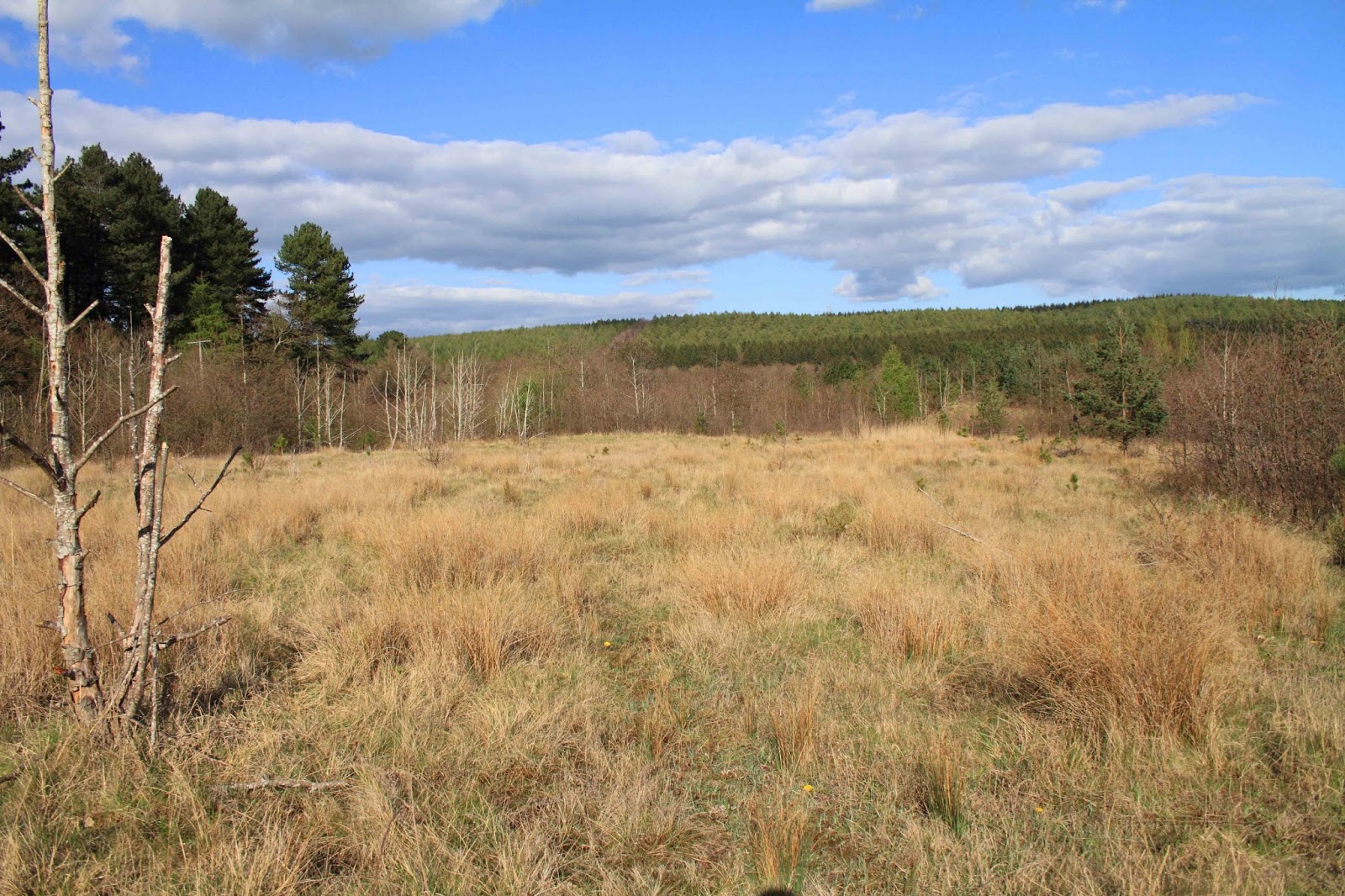
I headed out to one of my best locations for adders a few days ago, knowing that it was going to be tough due to the length of the grass and bracken.
It proved virtually impossible but I didn't give in. This was what was in front of me.

Adder Habitat
Its hard to imagine that adders favour this, but in the grass are loads of old, disused ant hills and the adders bask on top and around them.
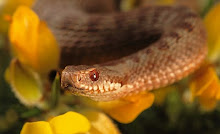
I managed to find four adders (or rather they found me), but after I nearly stood on one and two more hissed at me before I saw them, it was time to call it a day.
This will prove yet again to be my best recording site for 2013. I just need to wait a few more weeks.


INSECTS

I decided to check out the insects at this site and I wasn't disappointed. Loads of butterflies were swarming around the heather and although I really wanted to photograph an adder, my attention soon turned to the insects.

Gatekeeper

Small Copper

Common Blue


AND FINALLY

Our 2014 charity calendar is not ordered and ready for delivery, so please follow the link at the end of this post to order.
100% of all profits will go to the following...

Macmillan Cancer Care
Maggies Cancer Care Centres
Wildlife Trust


To order a calendar, please click HERE


Rob

Wednesday, 10 July 2013

Charity Calendar Available Now

Along with a good friend, Scott Passmore, we have teamed up to bring you our very first charity calendar.
Between us we have the ability to produce something very special, which will in turn help some very special organisations and we believe we have done this.
Our 2014 Charity Calendar is now ready to pre-order.


"All profits" will be split between the following...
Click for more info


Maggie's Centres

Macmillan Cancer Support

Gloucestershire Wildlife Trust

There are some truly stunning "wild" wildlife and landscape images inside, which will make perfect Christmas / Birthday presents, or just hang one on your own wall.

To pre-order, please follow the link below.
Click
HERE


Many thanks


Rob

Saturday, 29 June 2013

Busy Times!


Sorry for being quiet lately. As always I have been extremely busy with all things wildlife, so excuse the bombardment below, but here is an update as to what I have been up to over the last few weeks.
Unfortunately one of my hard drives crashed and I lost the majority of my images from 2013. Hopefully they can be retrieved and I will post some at a later date. 


Siccaridge 600 Bioblitz

Representing GlosARG and accompanied by two colleagues we helped Gloucestershire Wildlife Trust in their attempt to find and identify 600 different species of wildlife at Siccaridge Wood Nature Reserve.
The event was run over 30hrs, where more than 700 species were found and identified. This was a massive achievement by all who gave up their weekend for the wildlife and it just shows that Nature Reserves work!
Sadly the weather was not right for reptiles, but GlosARG made up for it by finding a large privet hawk moth, palmate newt and swan mussel. 

Click HERE for more info on the event

And HERE for some photos of the event

Interested in reptiles and amphibians? Visit GlosARG 


Cinderford Area Action Plan (Northern United)


Northern United


The Forest of Dean District Council has recently won a high court battle to develop one of the most diverse and wildlife rich habitats in the Forest of Dean.
Also known as Northern Arc and Northern Quarter, work will see a spine road built, isolating and fragmenting habitats, which is home to rare, declining and protected wildlife.

Fore the media article click HERE 

For the last two years I have been one of the people who has fought, not to see the development of Cinderford stopped, but to see it stopped at this location. Northern United. 
I have been attending FODDC meetings where I have been helping highlight the wildlife at this site and the threat to it if work begins.

I was and I still am more than aware that the town of Cinderford needs dragging out of the Stone Age, but there are too many flaws with this location.

  1. Deep mines run directly beneath the area, which is to be developed and built on. This build includes numerous houses, a college and possibly a hotel.
  2. Numerous vulnerable, declining and protected wildlife are found all over this location.
  3. How is it actually going to help the town of Cinderford as it is more than a mile away from the town centre.
  4. How will our drainage, roads and other amenities cope with this massive increase in people and vehicles?
  5. After construction, will there be equivalent (sustainable) employment created for the extra residents and will it help with the number of unemployed we have at present?
  6. What work will be available?
  7. Is this where it is to end, or will we see further development?
Like many other people, I have lived in the Forest of Dean my whole life and over the years and have learnt to appreciate and respect what an amazing place it is.
We need to protect our green spaces and our wildlife for future generations. More importantly, we need to show and teach our future generations that what we have is worth fighting for.
Yeah I know what some of you are thinking, "without employment, what future is there for them?"
This is where I will say again; I know we need more jobs, but this chosen area is the worst imaginable, with regard to biodiversity and wildlife.

My next fight, if/when work begins will be to try and save as many vulnerable wildlife species as I can. Any mitigation will be planned and implemented legally.
I'm not a paper shuffler and I have already been in contact with organisations and FODDC in case this day comes.
This is not in support, just "to save the wildlife."


Wild Boar

Wild Boar Piglet


A cull of wild boar is on the cards, likely to start in September. The "BIG" question as always is how many boar are out there and how many need to be culled, if any?
The biggest outcry for a cull always comes from members of the public that do not like seeing our road side verges dug up in the winter and I find this vile and sickening that people will call for an animal to be killed for exposing dirt, which is what our earth is made of!
Feelings from true forest people of the Forest of Dean that actually venture into the forest regularly is that sightings are very low. You only have to look online and you will notice that there is a massive drop in piglet photographs this year, compared to previous years. People just aren't seeing them!
This is worrying as the Forestry Commission has estimated their numbers at around 600 and I fear that if a cull is implemented, it could once again prove disastrous for this species.
I will not speculate as to why the numbers are low, but I have heard from a few sources that many boar are being baited onto private land where they are legally shot. Baiting them onto the land for this purpose could be seen as illegal though.

As we have new growth in the forest and the boar are finding their natural food, our road verges have recovered, along with the vegetation in the forest and many people are saying that it is the greenest they have seen the forest for years!
Could it be true? Could it be that the boar rooting has irrigated and regenerated the soil, allowing new growth to flourish?
We all know that by digging our gardens it actually helps our plants and vegetables grow, so why not in the forest?

Now for a bit of sarcasm.....
I am "very" disappointed by the lack of commitment by the dirt haters. So our road verges are once again lush and green and the dedicated, committed individuals that scream for the boar's blood every winter have once again gone silent.
To these people: If you are a true campaigner and if you want results, this is not the way to go about it. You must be strong, put your ass on the line and be there every single bloody day of the year. To only fight when things seem to be in your favour, only to sulk away when they are not, is a defeatist attitude.
I will look forward to seeing your dedication, your photographs and your dirt hate letters in the local media soon, to show how the boar has affected our road verges.


Along with a colleague Scott Passmore I featured in a media article recently, representing my other wildlife conservation group UKWBT
It was a double feature, with the forest insight from the Forestry Commission...

Then it was our turn

I must stress that Scott and I do not walk the forest with packs of condoms for the boar. Contraceptives are fed to the boar using specialist feeding stations and we feel that as prevention is always better than the cure, this is the way forward in helping control our boar populations, "if they require control."

Not Such a Common Sight


I will leave you with some images that I have taken since my hard drive gave up the ghost and thank you for taking the time to read.

Sitting Tight

Forest Sunset

Eggs Hatching

36 Hours Old

 
Had a Busy Day

Stretching Tiny Wings

Exploring the New World

The following are not great photos as I had to crop them, but it was fascinating to watch. Not good for the fish of course!

Gull Dives Under

Comes Up With a Large Fish

Starts to Swallow it

Nearly Down

All Gone!


Rob


Monday, 22 April 2013

Owen Paterson - Flogging the Country to Death!


Developers can build on nature reserves - if they 'offset' the damage elsewhere, says Government review


Today marks one of the darkest days in the history of the UK, where our natural world is concerned. Owen Paterson has, in effect given the green light for bulldozers to demolish our most diverse and unique wildlife habitats throughout the country.
When something is classified as a nature reserve, you would imagine and hope that it has been recognised as an area of significant importance and will therefore be protected? However, under Mr. Paterson's upcoming schemes we could see these tranquil and unique areas destroyed, to make way for development.

He goes on to say that this is OK as long as the damage is "offset" by creating similar habitats elsewhere.
So, what I would like to know and I expect you are asking yourself the same question; "how is it possible to re-create habitats that have taken centuries to mature and become established?"
Has he given any thought to this at all and I now wonder if he even knows what the word mitigation means?

Some of our most vulnerable wildlife such as the dormouse, great crested newt, water vole and adder can not just be lifted from one area and dumped in a man made equivalent a few miles or so away.
If this man thinks that this is OK and even achievable then he has concreted the fact that he knows very little about our natural world and environment. As he is supposedly our Environment Secretary, surely this proves that he should be replaced immediately before he destroys our wild places.

It will not matter if the targeted reserves are 10 square miles or just 1 square mile, if the chosen area has ancient and unique habitats, these will not be replicated by man overnight and whatever unique wildlife is living within will be lost forever.
If the wildlife is moved to an already established site, this will upset the balance and will lead to the significant loss a of number of the species in question.
Wildlife mitigation should be taken very seriously, especially where vulnerable, fragile species and habitats are involved. Sadly this seems to be something our Environment Secretary is either overlooking or ignoring.

In the Forest of Dean, we are already seeing this on a massive scale, losing one of our most diverse areas to development.
Among other wildlife, Northern United is home to the following species...

Great Crested Newt
Adder
Dormouse
Greater Horseshoe Bat
Lesser Horseshoe Bat

Work has already begun at this site. EU protected bats have already been seen flying for their lives as heavy machinery smashed down the buildings in which they roosted and work is soon to begin on a spine road, paving the way for the entire area to be concreted over.

So don't think your areas are safe for one minuet, as baron land is nothing more than a money making opportunity in their eyes!

We must all stand together to protect our most precious wild places before it is too late.

Telegraph Article - HERE

NORTHERN UNITED
This sight, along with the wildlife will soon be lost forever!

Just some of the prime wildlife habitat, soon to be bulldozed to make way for a road!

EU Protected Great Crested Newts are Present at Northern United


Rob

Wednesday, 3 April 2013

Oh Deer!

A Fallow & Roe Encounter

The past few nights have been encouraging and although I was actually out tracking wild boar, I did manage some nice fallow deer shots and a fleeting roe encounter.

I did stumble (literally) upon two young male boar sleeping, but before I could raise the camera they were bolting through the forest, weaving through the trees like two torpedoes.
If you have ever seen a wild boar run you will understand that when they take off, they can reach speeds up to 20-25mph within a second or two and in dense woodland, all you can do is watch them fade away into the shadows.
Another encounter was of a sow, but yet again it was of her bum disappearing into some dense plantation. There is no point following as it is too dense and you would just disturb them for no purpose.

Moving on and covering approximately 5 miles in total I did find some handsome fallow bucks, which were a little more accommodating.


I never tire of seeing deer, but there is one species that I adore and that is the roe deer, Britain's true native deer species.
There were 5 in total and although I get a massive buzz every time I see them, I couldn't have picked a worst location as they were right next to a old, half collapsed Forestry fence and the sun was in my face. 
Unfortunately you can't predict when and where you are going to have your encounter, so I made the best of it that I could.

Roe Buck

Here we have forest ecology at work; wild boar diggings deep in the forest. To some, this looks unsightly when it appears on the road verges, but I dare anyone to prove that this is actually bad for the forest?
This activity unearths dormant seeds and cultivates the soil, revitalising and regenerating it after centuries of being compacted.
The wild boar are partly responsible for creating our living landscape, from when they lived wild throughout Britain centuries ago. 

Boar Rooting, Deep in the Forest


And what better than a natural fertiliser! There were absolutely loads of boar turds like this strewn throughout the boar diggings, with most already trodden into the exposed soil.
Ask any farmer what muck spreading does for their land as this is what is naturally happening throughout our forest every year. 

Wild Boar Turds

I couldn't leave you without showing a cute humbug shot!


Oink Oink!

And finally, it may feel like we have missed spring this year, but the signs are still out there!

Spring Lamb

Rob

Saturday, 30 March 2013

1st Adder - 2013

Sssssssssnakes!


Found my first adder of 2013 today.
For the details and photograph click HERE

Rob